Friday, June 28, 2013

Red Deer and Magpie


Red Deer Cervus elaphus and Magpie Pica pica were two abundant species that lived on the sandy plains off Gorham's and Vanguard Caves. The deer would have been hunted by a range of carnivores and also the Neanderthals. They have wide habitat choice and would have lived in dense scrub (as here) but also open pine woods and close to shallow lakes. The magpies prefer open habitats with a few trees, on which they build their nests, and are omnivorous taking a range of foods including large insects, lizards, small birds and carrion. They are among the first at a carcass.

Monday, June 24, 2013

The Griffon Vulture


The plains outside Gorham's Cave attracted many scavengers who were always ready to take the opportunity of a carnivore kill or the remains of animals left by the Neanderthals. The Griffon Vulture Gyps fulvus is numerous in the deposits from 20 to 60 kyr. These birds would have nested on the many ledges on the cliffs of Gibraltar. Last year we published findings that showed that the Neanderthals were catching these birds and skinning them in order to get the large feathers which we think they wore.

Friday, June 21, 2013

The Spotted Hyaena


The Spotted Hyaena Crocuta crocuta was the commonest carnivore outside Gorham's and Vanguard Caves between 60 and 20 kyr. Some of the specimens were huge, much larger than any cousin that you could fine today in Africa. Some palaeontologists define these as cave hyaenas C.c.spelaea.

Monday, June 17, 2013

The new face of Natur-al-Andalus


After a year's absence we return with a purpose. Each post will consist of a photograph taken by one of us and a brief description. Our aim is to slowly build up an archive of images of the species which we are finding  in the fossil record of the Gibraltar Caves. For information on those caves and the work being done there visit our sister blog at http:clivehumanevo.blogspot.com

Here's a Golden Eagle Aquila chrysaetos photographed recently by Stewart. This species is frequent in the levels at Gorham's Cave and was a component of the fauna at the time of the Neanderthals (60-31.5 thousand years ago). It most likely nested on the cliffs of Gibraltar and hunted on the plains which are now submerged. In a recent paper we showed that the Neanderthals took these birds for their feathers.

Sunday, April 29, 2012

Migration drama above the skies of Gibraltar


This time of year sees a life and death drama unfold on numerous occasions above Gibraltar's skies. Tired migrating raptors reach the cliffs of the Rock of Gibraltar after crossing the sea. Here they are met by territorial Peregrine Falcons Falco peregrinus brookei and Yellow-legged Gulls Larus michahellis.


The Peregrines are defending their nest area and have daily battles with the gulls for rights to airspace


The gulls do the same, hanging in the wind above the nests, ready to pounce on anything that comes near...


The levels of aggression increase now that the young have hatched...


So migrating raptors are up against it...


For starters, they have the sea crossing, often in high winds. Here a Booted Eagle Hieraaetus pennatus struggles to reach the Rock. In the background, Ceuta on the North African coast, where it has come from, with the tall Rif Mountains behind.


Utterly exhausted, it crash lands


Others, like this Black Kite Milvus migrans, are immature birds in moult or with many flight feathers missing. This doesn't help either...


Then there are the gulls and the falcons...


That also forces unexpected landings...


Some of these birds recover and fly off but others are not so fortunate...


they ditch in the sea, and drown...


So this is the real drama of life and death. Can we blame the gulls and the falcons? I think not. They are just defending their own...


Sunday, April 8, 2012

Where the Imperial Eagle is Lord and Master


We spent some time watching and photographing the rare Spanish Imperial Eagle Aquila adalberti in one of its traditional haunts, in the Monfrague National Park of Central Spain.


This is the home of the Griffon Vulture Gyps fulvus, which nests in colonies on the impressive cliffs


Here the vultures come and go as they please, it seems, but this time they weren't to have everything their way...


The morning seemed quiet enough, even a newly arrived Short-toed Eagle Circaetus gallicus pausing to look for unsuspecting snakes


An adult Imperial Eagle arrives - it has decided to nest on some trees close to the Griffon colony


It patrols the cliff line and even comes down near to the vultures' nests


It is an amazing bird at close quarters...


...and it chases off any Griffon that ventures near!


We watched the eagles for a couple of hours and Stewart came home with a wonderful range of images of this spectacular eagle. All where the Mediterranean forest meets the cliffs in Monfrague


Monday, March 26, 2012

When bad weather brings the migrants down, especially the males


Easterly winds, grey skies and showers at this time of year tend to bring down migrants at Gibraltar. Here they can feed in the olive scrub and woodland, sheltered from the wind. Many have just crossed the Sahara and are ready to feed and drink as they await better weather. This past weekend saw a large arrival of migrants.


Among the main species were Blackcaps Sylvia atricapilla. These large, pale, long-winged birds (above) rapidly outnumbered the greyer local birds (below) which are now breeding. The latter soon gave up trying to chase all the newly arrived males from their territories!


Most of these early migrants are males aiming to set up territories ahead of the females. The latter will dominate the migration later on


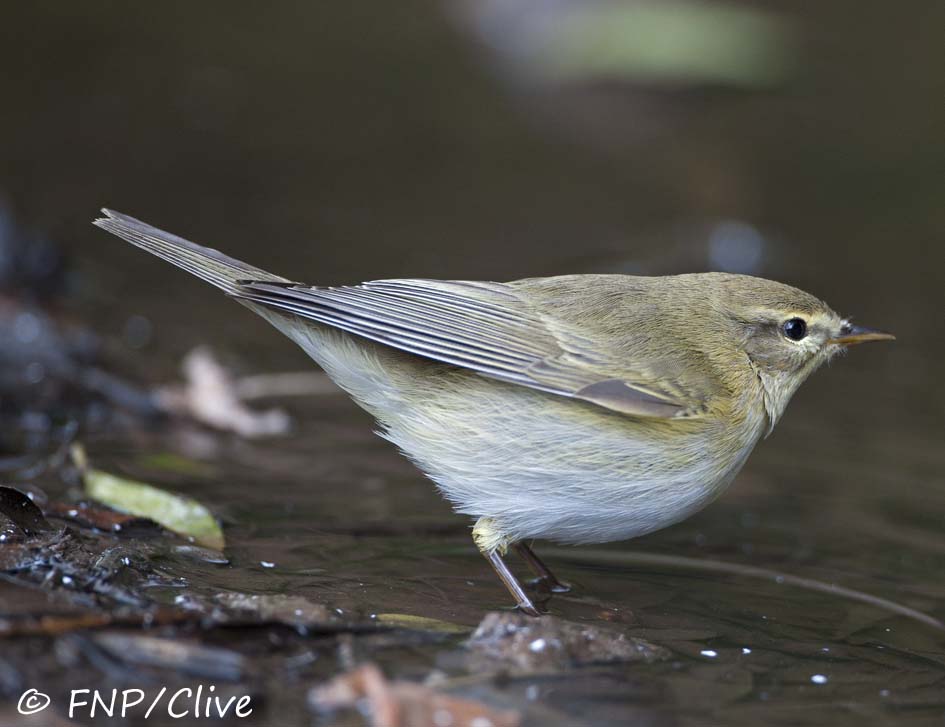
Willow Warblers Phylloscopus trochilus (above) and Chiffchaffs P. collybita (below) were also numerous


Males also dominate the Common Redstart Phoenicurus phoenicurus (above) component at this time but Nightingales Luscinia megarhynchos (below) are more difficult to separate 


Male Subalpine Warbler Sylvia cantillans completes the male-dominated migration